Supporting the Development and Publication of the Indicators of School Crime and Safety Reports
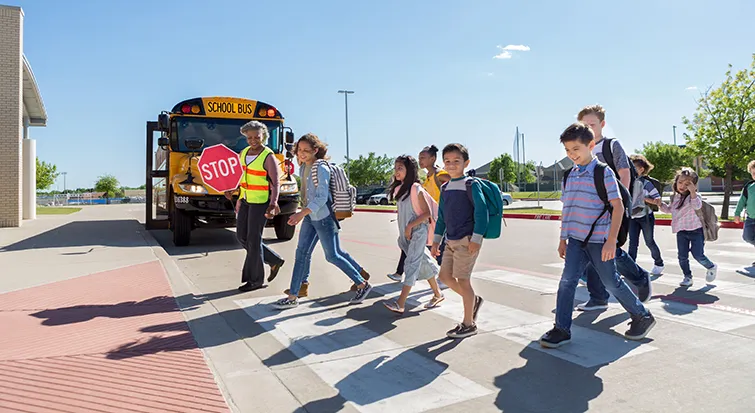
Making school safety data clear, timely, and actionable
For two decades, AIR supported the development and publication of Indicators of School Crime and Safety, an annual flagship report jointly sponsored by the National Center for Education Statistics (NCES) and the Bureau of Justice Statistics (BJS).
The report presents more than 20 indicators on topics such as school shootings; bullying; fights, weapons, and illegal substances; safety and security practices; mental health services; and postsecondary crime by drawing on national surveys of students, teachers, and schools, as well as administrative data.
These indicators empower policy makers and practitioners to make evidence-based decisions, design effective prevention strategies, and improve safety for students and staff by offering a clear picture of the scope and nature of school crime and safety issues. The report primarily uses data tables from the Digest of Education Statistics.
Our Impact
AIR provided statistical, design, and production support for the Indicators of School Crime and Safety between 2000 and 2024. AIR played a pivotal role in shaping the Indicators of School Crime and Safety, leading authorship, driving innovation, and expanding the report’s accessibility.
This work was essential because school safety data inform policies and practices that directly affect millions of students, families, and educators nationwide.
Highlights of AIR’s contributions include the following:
- Authoring indicators to highlight findings. AIR wrote most of the school crime and safety indicators each year.
- Our team checked and analyzed data from many sources, including national surveys (e.g., National Crime Victimization Survey, Youth Risk Behavior Surveillance System, School Survey on Crime and Safety, National Teacher and Principal Survey), administrative records (e.g., EDFacts, Campus Safety and Security Survey), and specialized federal data sets (e.g., CDC’s National Vital Statistics System, FBI’s Studies of Active Shooter Incidents), to make sure it was accurate and reliable.
- AIR assembled disparate data structures and trend analyses into one place, making it easier for decisionmakers to spot patterns, allocate resources, and shape school safety strategies.
- Our team checked and analyzed data from many sources, including national surveys (e.g., National Crime Victimization Survey, Youth Risk Behavior Surveillance System, School Survey on Crime and Safety, National Teacher and Principal Survey), administrative records (e.g., EDFacts, Campus Safety and Security Survey), and specialized federal data sets (e.g., CDC’s National Vital Statistics System, FBI’s Studies of Active Shooter Incidents), to make sure it was accurate and reliable.
- Driving innovation in indicator development. AIR led the creation of new topics and the redesign of existing ones by closely monitoring education and safety issues and changes in key data sets.
- In 2020, AIR developed a spotlight on school-based mental health services, which later became a recurring Condition of Education indicator. We previously led the implementation of these mental health items as part of our work supporting the School Survey on Crime and Safety, which allowed us to integrate the new findings quickly and effectively into the Indicators of School Crime and Safety report. This indicator provided leaders with crucial data to strengthen student mental health supports at a time of growing need.
- In 2024, AIR redesigned the Student Bullying indicator—one of NCES’s most accessed safety topics—to report the data using more detailed breakdowns that allow for better identification of where bullying occurred, so schools can implement more targeted prevention strategies.
- AIR conducted new analyses on opioid use, school shootings, and other emerging threats to students. These additions equipped policy makers and practitioners with evidence to respond proactively to high-priority safety crises.
- In 2020, AIR developed a spotlight on school-based mental health services, which later became a recurring Condition of Education indicator. We previously led the implementation of these mental health items as part of our work supporting the School Survey on Crime and Safety, which allowed us to integrate the new findings quickly and effectively into the Indicators of School Crime and Safety report. This indicator provided leaders with crucial data to strengthen student mental health supports at a time of growing need.
- Expanding accessibility with new report formats. To expand accessibility, NCES launched the Report on Indicators of School Crime and Safety.
- AIR designed and produced the inaugural edition in 2021, establishing a new model for communicating findings more effectively. This format extended the report’s reach, ensuring that policy makers, educators, and the media could quickly grasp and act on key safety findings.