Center on Advancing Measurement and Assessment
We are committed to improving measurement and assessment to maximize opportunities for all young people and adults to learn and thrive.
Projects
Center experts use well-established approaches to measurement and assessment from a broad range of projects. These projects provide essential guidance on measure development, validation, and interpretation in future work.
This is a curated collection of AIR projects that have made important progress in the measurement and assessment field. The center collaborates with other involved groups and centers at AIR, including the Data Science group and Center for Process Data.

Whole-Child Development
We have extensive experience developing measures that support clients in gathering and using data to inform policy and practice in social emotional learning, school climate, youth development, and civics education.
International Early Learning Study (IELS)
IELS is an international study of 5-year-olds’ knowledge and skills in four key areas: emergent literacy, emergent numeracy, self-regulation, and social emotional skills. Children are directly assessed via activities on a tablet. Parents and teachers provide information on children’s skills and experiences via online surveys. The United States, England, and Estonia participated in a field test for IELS in the fall of 2017 and then conducted the IELS Pilot Study in fall 2018. IELS helps countries better understand how their early childhood education and care systems prepare children for primary school.
Youth Development Measurement Lab at AIR
Center experts partner with organizations that support youth to provide measurement and customization services and to support using data in reports, tools, action planning, and goal setting.
Nevada School Climate Survey
Center experts work directly with Nevada districts and schools to support school climate survey efforts. AIR provides survey reports, a peer matching tool, and a detailed interactive data tool that shows subgroups’ results and trends.
The Potential of Science of Learning and Development (SoLD) to Transform Education Systems
The SoLD initiative grew out of a partnership including AIR, Education Counsel, The Opportunity Institute, Learning Policy Institute (LPI), Turnaround for Children, and Populace. Each organization committed to improving outcomes for all students, particularly for students how have been and continue to be underserved by our education system.
Standards and Accountability Systems
We have developed high-quality, cohesive and comprehensive standards-based systems to support equitable teaching and learning outcomes for all students.
The Impact of Comprehensive Support and Improvement (CSI) Designation in Multiple Measure ESSA Accountability Systems
Center experts are studying CSI Schools to understand student outcomes and best policies and practices.
Large-Scale Surveys and Assessments
We have decades of experience supporting large-scale surveys and assessment tracking patterns and trends in domestic and international education, through data processing, analytics, reporting, and dissemination.
Trends in National Mathematics and Science Study (TIMSS)
TIMSS is an international comparative study that measures mathematics and science achievement, as well as contextual information, at the 4th and 8th grades every 4 years in over 70 education systems, including the United States. The study is the largest pool of trend data from any international large-scale assessment in education. It is designed to align broadly with mathematics and science curricula in the participating education systems and, therefore, to reflect students’ school-based learning.
Program for International Student Assessment (PISA)
PISA is a large-scale international assessment that measures 15-year-olds' capabilities in three literacy domains—reading, mathematics, and science—and optional domains, such as financial literacy. In many countries, including the US, compulsory education ends after age 15, which makes the age a useful benchmark for assessing students' preparedness for adult life. PISA results are widely reported and used by policymakers to compare US students' functional literacy skills with peers in other industrialized countries and measure how student achievement has changed over time.
Progress in International Reading Literacy Study (PIRLS)
PIRLS is a large-scale international assessment that measures reading achievement every 5 years at the 4th grade level. The study provides trends and international comparisons of fourth grade students’ reading achievement and students’ competencies in relation to how well children read and offers policy-relevant information for improving learning and teaching. Assessing reading achievement when children at the 4th grade level transition from learning to read to reading to learn provides educators and policymakers with key insights into the effectiveness of their education system and helps to identify areas for improvement.
Program for the International Assessment of Adult Competencies (PIAAC)
PIAAC is a large-scale study conducted in the United States and other countries. It is designed to measure, analyze, and compare adults' foundational skills of literacy, numeracy, and problem solving.
National Assessment of Educational Progress (NAEP)
Center experts support the NAEP program in ensuring it remains a valid, reliable, and useful source of information on patterns and trends in the academic achievement of American youth.
International Comparisons in Education
Center experts provide technical and analytical support for U.S. participation in TIMSS, PISA, PIRLS, and PIAAC, including consultation and management support; support on survey and item development; technical review of statistical reports, data files and data documentation; expert analysis; technical support for the development of web-based data tools and other products; and training external researchers to use internal assessment data files and other survey resources.
Teaching and Learning Environments
We work closely with international, federal, and state clients to develop, use, and analyze measures for teaching and learning conditions.
Teaching and Learning International Survey (TALIS)
TALIS gathers information from teachers and school leaders about working conditions and learning environments in over 50 education systems. TALIS is unique because it is the only comparative international education study that collects data on nationally representative samples of teachers. For the United States, TALIS provides key information on teachers and principals and how they and their working and learning environments compare internationally.
AIR's Teaching Conditions Survey
Center experts work with colleagues at AIR's Center on Great Teachers and Leaders to understand and collect data on teacher satisfaction, retention, and conditions.

Using Assessment to Personalize Learning
We develop and utilize innovative methods to improve measurement and implement assessment processes that provide credible, useful data to inform decision making.
Exploring How States Identify Pre-Kindergarten English Learners
Center experts examine how states approach the issue of screening and identifying pre-K children for English learner status.
Study of Deeper Learning: Opportunities and Outcomes
Center experts develop and utilize innovative methods to improve measurement and implement assessment processes that provide credible, useful data to inform decision making.
Postsecondary Competency-Based Education (CBE)
Center experts led a national research collaborative dedicated to building evidence on CBE, conducted a national survey to better understand adoption and perception of CBE, researched the efficacy of CBE, and provided tools to support research, evaluation, and continuous improvement efforts.
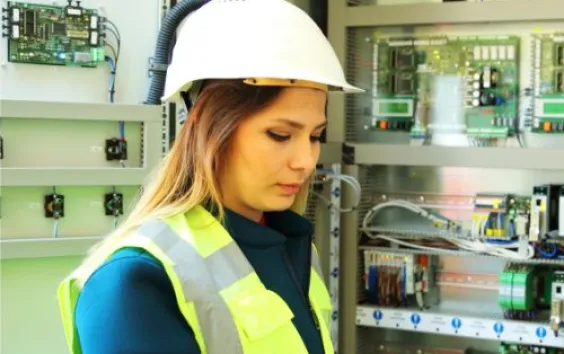
Workforce Development
We have decades of experience developing professional certification and skills assessments, including test development, test updates, and norming to ensure the fairness, validity, and security of assessments.
Innovations in Assessment
The Human Capital & Learning workgroup at AIR is pioneering AI-based employment assessments building on decades of applied research and expertise.
Holistic and Skills-Based Assessments
AIR experts are integrating holistic and skills-based assessment practices to help employers make more informed decisions about candidates and job requirements.
Electrical Training ALLIANCE
Through a long-term partnership with the electrical training alliance, center experts have conducted job analyses, test development, test norming, and transportability analyses.
Practice Analysis for Certified Public Accountants
Center experts collaborated with the American Institute for Certified Public Accountants to make changes to the test blueprint of the Uniform CPA Exam and update the organization’s practice analysis.
Maryland College and Career Readiness Empirical Study
Center experts collaborated with the Maryland Department of Education to conduct an empirical study of Maryland's College and Career Readiness (CCR) standards. The study included a predictive validity analysis and a content and standards alignment analysis.

Measurement Methodology
We develop and use innovative methods to improve measurement and implement assessment processes that provide credible, useful data to inform decision making.
Center for Process Data
The Center for Process Data, with NCES, is working to maximize the potential of process data to deepen our understanding of student behavior and assessment engagement; to inform decisions on assembly, development, and operations; and to analyze and report data. Process data maximizes the power of assessment results to better understand what the nation’s students know and can do.