Connecting U.S. Classrooms to International Standards Through School-Age Learner Assessment
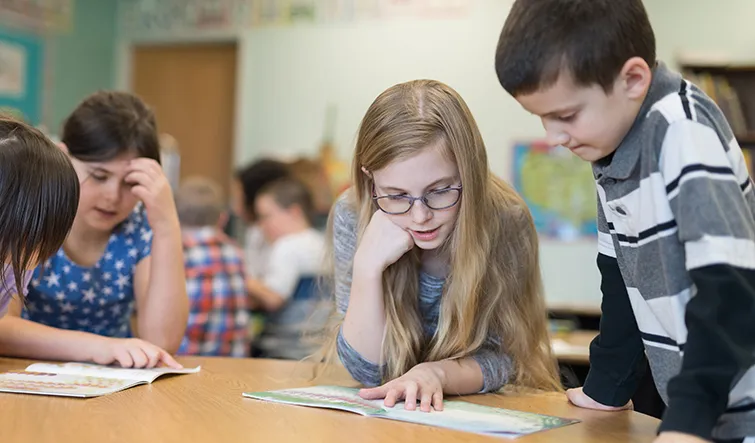
National tests alone cannot show how U.S. students compare globally or whether they are developing skills needed for a global economy. By participating in international education assessments and surveys, the U.S. addresses this challenge, measuring U.S. student learning from early childhood through secondary school and how well students apply their knowledge compared with their international peers.
These studies also collect data on curriculum, teaching preparation, instructional practices, and learning environments. Together, these data support more equitable, effective instruction and smarter education policy in the United States.
Our Work
For more than 20 years, AIR has supported the National Center for Education Statistics (NCES) with U.S. participation in these international assessments. At the study level, AIR drives core implementation activities, including item and questionnaire development, sampling and weighting, quality assurance, trend analyses, and reporting, ensuring that each U.S. administration meets international technical standards and produces credible, policy-relevant results that promote the effective use of these data in policy and practice.
This work strengthens the reliability and international comparability of U.S. results. It elevates the nation’s presence and impact in global education research while informing domestic education improvement.
For a comprehensive view of AIR’s contributions across the full assessment cycle from implementation through reporting, visit International Comparisons in Education.
Assessments and Surveys Supporting School-Age Learners
International assessments and surveys span the K-12 learning lifecycle from early childhood through elementary and secondary school, and include school educators.
Learn more about each of the following assessments and surveys supporting school-age learners below:
- International Early Learning Study (IELS)
- Progress in International Reading Literacy Study (PIRLS)
- Trends in International Mathematics and Science Study (TIMSS)
- International Computer and Information Literacy Study (ICILS)
- Program for International Student Assessment (PISA)
- Teaching and Learning International Survey (TALIS)
International Early Learning Study (IELS)
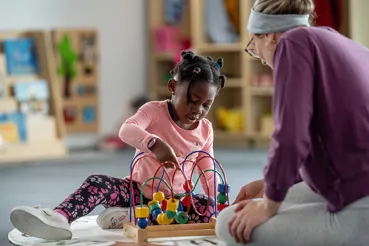
IELS, organized by the Organization for Economic Cooperation and Development (OECD), is the first international direct assessment of 5-year-olds’ early learning skills. Piloted in 2018, this play-based, tablet-administered study measures emergent literacy, numeracy, and self-regulation, complemented by teacher and parent surveys on home environment and early education.
Unique for its focus on early learning experiences, IELS provides cross-country insights into early childhood development and showcases innovative digital approaches to assessing early childhood foundational development.
Through rigorous technical frameworks and policy-driven design, OECD and IEA produce trusted, internationally comparable data that allow countries to benchmark performance, identify what drives success, confront shared challenges, and advance evidence-based reforms that strengthen education systems worldwide.
For over two decades, AIR has represented the U.S. in collaboration with OECD and IEA on behalf of NCES, serving as a trusted thought partner for methodological leadership and rigorous quality assurance to elevate U.S. presence and credibility in global education research.
Progress in International Reading Literacy Study (PIRLS)
Sponsored by the International Association for the Evaluation of Educational Achievement (IEA), PIRLS assesses 4th-grade reading achievement every five years, providing critical insights into how students read for literary experience and information acquisition. The study evaluates key comprehension processes, including retrieving information, making inferences, integrating ideas, and evaluating content and text structure.
Conducted at a pivotal stage—when most curricula shift from learning to read to reading to learn—PIRLS delivers data-driven, policy-relevant insights to strengthen early reading instruction worldwide.
Trends in International Mathematics and Science Study (TIMSS)
TIMSS, conducted by the IEA, measures 4th- and 8th-grade math and science performance every four years across 70+ education systems, including the U.S. It provides the largest and longest-running international trend data, offering unparalleled insights into how student achievement has evolved over time. Because TIMSS is designed to align closely with participating education systems’ mathematics and science curricula, it reflects students’ school-based learning and supports global improvements in curriculum design and instructional practices.
Several U.S. states—including Minnesota, North Carolina, and Massachusetts—have participated as benchmarking entities to compare performance globally.
TIMSS Advanced assesses advanced mathematics for students in their final year of secondary school, offering insights into STEM readiness.
International Computer and Information Literacy Study (ICILS)
Sponsored by IEA, ICILS evaluates 8th-grade students’ digital skills and computational thinking every 5 years across global education systems. ICILS measures two key domains:
- Computer and Information Literacy (CIL): Skills for locating information, managing online safety, and assessing credibility; and
- Computational Thinking (CT): Problem-solving and algorithmic design through block-based coding tasks.
In addition to performance data, ICILS collects contextual information from students, teachers, and schools on technology access, usage, and attitudes. These insights provide a comprehensive view of digital readiness, helping education systems understand how well students are developing technology and problem-solving skills essential for success in the 21st century.
AIR’s experts with deep knowledge in both Computer Information Literacy and Computational Thinking led comparisons that turn data into insight for policy practice. For example, AIR co-authored this comparison study and this blog.
The National Assessment of Educational Progress (NAEP) shows what 8th-graders know about technology and its role in society, while ICILS measures the real-world digital and computational thinking skills they use every day. Together, they tell a complementary story of digital readiness.
Program for International Student Assessment (PISA)

PISA, coordinated by the OECD, looks at how well 15-year-olds can apply their knowledge in reading, mathematics, science, and real-world problem solving, including skills such as financial literacy and creative thinking. Conducted every three years from its inception through 2025, and transitioning to every four years after 2025, PISA focuses on students who are close to finishing compulsory schooling, using age instead of grade level to select participants across global education systems.
Emphasizing application of knowledge rather than curriculum mastery, PISA measures how well students can think, interpret information, and solve practical tasks. The results give countries a way to compare education systems and show how prepared students are for the challenges of modern life, both in school and beyond.
AIR supports the U.S. through the financial-literacy component of PISA, providing global benchmarks to help educators and policymakers see how U.S. students compare internationally.
Building on these insights, AIR partners with schools, states, and national organizations to enhance financial-literacy standards, improve curriculum design, and evaluate classroom tools like the Stock Market Game. By connecting international evidence with practical instruction, AIR empowers students to develop financial confidence and prepare for real-world financial decisions and adult life.
Teaching and Learning International Survey (TALIS)
Sponsored by the OECD, TALIS gathers data from teachers and principals about their backgrounds, work environments, instructional practices, and professional development. Conducted every five years from its inception through 2018, and every six years thereafter, TALIS is the only international study that collects nationally representative data directly from educators, offering unique insights into classroom practice, school leadership, and the conditions that shape teaching and learning.
By amplifying teacher voices, TALIS informs policies that improve teaching quality, professional support, and working conditions worldwide. It enables countries to compare teacher practices and school environments internationally, highlighting strengths, gaps, and shared challenges. These insights help education systems, including in the United States, develop evidence-based policies and stronger supports for educators.