Evidence on a Change Agent Program in the Democratic Republic of the Congo
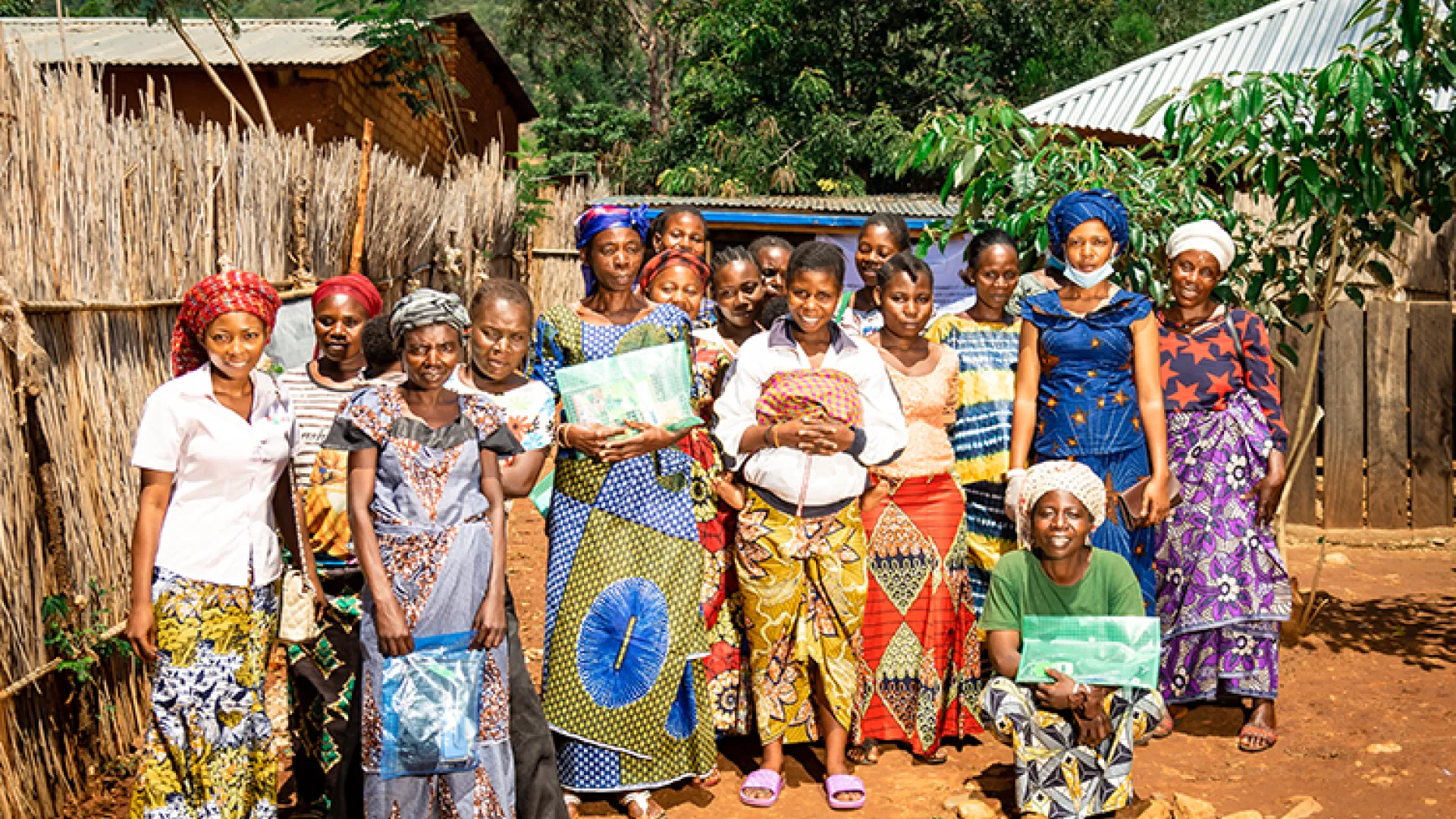
Change Agents in DRC advocate for women’s land rights and facilitate the provision of land titles to female farmers who had never owned land previously.
Image credit: Sighted Design 2022
Many women in the Democratic Republic of the Congo (DRC) have experienced sexual violence, mobility restrictions, and extreme economic and social insecurity. In particular, the eastern region of the country has some of the highest rates of gender-based violence.
The Change Agent Program
Through the AIR Opportunity Fund, AIR provided funding to generate and apply evidence on a community engagement program in Eastern DRC. AIR partnered with Women for Women International (WfWI) to study the implementation and impact of WfWI’s Change Agent Program on gender-equitable practices and norms in the DRC.
The program moves beyond the traditional focus on individual woman’s self-improvement to a holistic, gender-transformative approach targeting the larger social structures in the community. Since 2017, WfWI has piloted the program in six countries, including the DRC, Rwanda, Iraq, Afghanistan, Kosovo, and Nigeria.
The Change Agent Program trains selected women in advanced leadership and community advocacy to become “change agents” in their community. The change agents develop a thematic understanding of the core issues that affect women’s lives and use community outreach to engage male members, religious and political leaders, local officials, and other stakeholders to address these issues.
Mixed-Methods Study
Under this project, AIR conducted a mixed-methods study to address the need for evidence on the program’s implementation and impact and effectively inform its expansion. In partnership with WfWI, AIR measured program impacts on gender attitudes, women’s self-efficacy, access to social support, gendered practices, community norms, and interpersonal violence using a quasi-experimental evaluation. Using participatory qualitative research, the team also uncovered the perceived impacts and mechanisms of change within local contexts.
AIR's approach used interdisciplinary and participatory methods in every stage of the evaluation. We embedded our research in the program context by including voices of program implementers, change agents, and community members in the DRC to emphasize community-driven programming that can transform attitudes and practices and lead to lasting social change. The study filled a critical need for evidence on the program’s implementation and outcomes to inform its scale-up and filled larger evidence gaps related to the mechanisms for gender-based structural change.