Address Educator Shortages | GTL Center

Take an Integrated Approach to Addressing Educator Shortages
States often approach educator shortages and gaps in access to effective educators as separate problems with separate solutions.
Too often, states resort to disconnected policies and stop-gap solutions to fill vacancies without long-term, systemic strategies to address the interconnected root causes of educator shortages and gaps in access to effective educators.
At the Center on Great Teachers and Leaders, we have worked alongside multiple states to use an integrated approach that considers these challenges together while also combining short-term and long-term strategies to create a comprehensive solution.
Piecemeal vs. Integrated Approaches
- Piecemeal approaches often address educator shortages without considering related impacts on access to effective educators. Tackling each challenge separately overlooks the multiple, interconnected factors that need to be addressed in an integrated manner.
- Integrated approaches, in contrast, start from understanding the interconnections between these challenges. Integrated efforts are more likely to achieve the desired impact—resolving shortages and expanding access by attracting, recruiting, and retaining effective educators for the students who need them the most.
We offer comprehensive, step-by-step planning tools and implementation resources, as well as evidence-based briefs, toolkits, and professional learning materials to help state and district leaders make meaningful, data-driven decisions to address the educator shortages and effectiveness gaps unique to their specific context.
Top Resources

Decision Points: Defining, Calculating, and Addressing Gaps in Access to Effective Educators
Explore four key decision points states should consider in measuring access to effective educators. For each decision point, find state and local examples for initial determinations for policy and reporting, as well as ways states are supporting districts in identifying gaps in access to effective educators.

Educator Shortages in Special Education: A Toolkit for Developing Local Strategies
Co-developed with the CEEDAR Center, this interactive tool is organized around the guiding principal that short-term strategies to meet immediate demand must be intentionally paired with long-term, systematic strategies to attract, prepare, and retain effective special education teachers that together create comprehensive solutions. The toolkit includes a Facilitator's Guide and three supporting sets of tools.
Featured Project
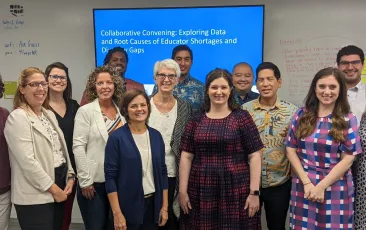
National Collaborative on Educator Workforce Shortages (2022-2024)
To support states in addressing urgent educator workforce challenges, in 2022, the Center engaged three state teams from Hawai'i, Ohio, and Louisiana to participate in a National Collaborative. This two-year, data-driven facilitated coaching process helped state teams understand the root causes of shortages and find solutions that are built for sustainability.

Comprehensive Center Network: Cross-State Collaborative on Educator Shortages and COVID-19
In collaboration with Region 1 and Region 9 comprehensive centers, the GTL Center facilitated five peer-to-peer engagements with state teams to identify local challenges related to educator shortages exacerbated by COVID19 and share strategies and opportunities to strengthen the educator workforce.