Kylie Klein is a senior researcher at AIR, where she works with state, regional, and local agencies on research, evaluation, and technical assistance projects. Her research focuses on developing and sustaining research-practice partnerships, designing and conducting evaluations, and supporting the use of research evidence in state and local practice and ...
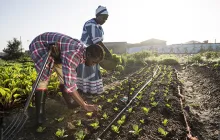
Despite concerted efforts by various governments and international agencies, low agricultural productivity remains a persistent challenge in many developing countries. Using findings from three case studies of value chain assessments conducted by AIR in Uganda, Mozambique, and Georgia, AIR provided evidence-based policy recommendations to improve programming in value chains in ...
AIR is leading a federally funded network that will conduct and share research that addresses learning setbacks resulting from the COVID-19 pandemic. AIR has been awarded a three-year, $3 million grant from the Institute of Education Sciences (IES), the research, evaluation and statistics arm of the U.S. Department of Education, ...
Chinmaya Holla is a researcher, specializing in gender and social norms, women’s economic empowerment, education programming in humanitarian settings, and foundational learning. He supports quantitative research design, data collection and analysis for numerous projects and contributes to impact evaluations, evidence syntheses, and cost analyses. He has previously worked on projects ...
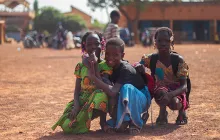
Of the approximately 175 countries on the World Bank’s Human Capital Index, Burkina Faso scores among the lowest, with more than 40 percent of the country’s population living below the national poverty line. In response to recurrent food crises, high levels of malnutrition, and low and unequal levels of education ...
The 17 Sustainable Development Goals (SDGs) serve as an urgent call for action to encourage all countries to work on ending poverty while improving health and education, reducing inequality, stimulating economic growth, and addressing extreme climate events. With the endpoint of 2030 approaching, it is critical to assess progress toward ...
In a webinar on February 28, 2023, AIR presented new data across case studies, including the key institutional, political, financial, and sociocultural factors affecting the inclusion of displaced children into national education systems.
This research brief explores the research and practice evidence on strategies intended to support opportunity youth and identifies a researcher-practitioner learning agenda to support opportunity youth on a path to thriving.
To improve Food and Drug Administration (FDA) surveillance of social media trends related to tobacco products, AIR built two social media analysis tools that leverage machine learning, text analytics, and natural language processing to scrape and analyze content on social network websites.
Displaced workers may need different kinds of supports than workers who become unemployed for other reasons. In this blog post, experts from AIR's PROPEL Center explore three of the key themes that emerged from the landscape review they conducted to identify workforce system approaches that better support displaced workers and ...