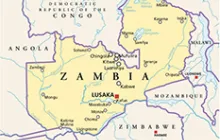
The Zambian Ministry of Education’s 2002 “Education for All” policy provided access to education for thousands of children, many coming from lower socioeconomic levels. The policy greatly benefited vulnerable children, especially girls, but it also challenged the education sector by flooding schools with more pupils than the system could handle. ...
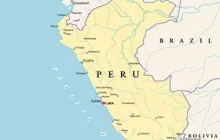
Approximately 135,000 children between three and five years of age live in the departments of Ayacucho, Huancavelica, and Huánuco in Peru, where total poverty and extreme poverty rates far exceed the national averages. AIR is evaluating the impact of a preschool program which aims to improve the quality of early ...
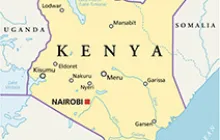
Smallholder farmers rely on crops for income and food security, but their ability to generate income and maintain food security is threatened by a number of factors. Kenya’s Plantwise program is a global initiative that provides smallholder farmers with vital information on the maintenance of crop health and environmentally sustainable ...
As California approaches a new system of academic standards, instruction, and assessment, it enters familiar territory. The use of multiple modes of assessment, tight alignment between assessments and expectations for student learning, and a focus on assessment for formative (as well as summative) purposes—all with an emphasis on students’ understanding ...
Rural educators in the Northeast Region are beginning to implement the Common Core State Standards for Mathematics. For the implementation to be successful, teachers reported needing more time to collaborate and increased access to high-quality curricula and professional development opportunities.
California's Transitional Kindergarten (TK) is intended to provide an additional year of early education for younger children, with the goal of promoting their success in school. The Heising-Simons Foundation and The David and Lucile Packard Foundation are partnering with AIR to study the impact of TK on children’s academic and ...
With the 2012-2013 school year, California established a new grade level—Transitional Kindergarten (TK), the first year of a two-year kindergarten experience for students who turn five between September 2 and December 2. When TK began, there were many questions from parents and other stakeholders. This is the third in a ...
AIR is developing a benchmarking tool as part of the World Bank’s System Assessment and Benchmarking for Education Results project that will allow countries to analyze their progress in implementing curriculum-based learning standards. The tool will be developed in conjunction with extensive research on the conditions and policies needed to ...
Although increasing numbers of children are enrolling in primary school in low- and middle-income countries, many enter late, fail to progress, and drop out. A child-to-child approach to enhancing learning in developing countries is designed to provide preschool-aged children with early learning opportunities in their homes and their communities at ...
In response to the numerous challenges facing the education system following Timor-Leste’s independence in 1999, UNICEF launched a far-reaching program to help restore its system of basic education. The main objectives of this program were twofold: first, to assist in developing a system of quality basic education; and second, to ...