On March 31, 2022, President Joe Biden proclaimed April 2022 as Second Chance Month. Second Chance Month 2022 featured 30 live events for stakeholders focused on reentry basics, education, employment, housing, behavioral health, family supports, youth and young adults, and evaluation and sustainability. The month also included live workshops specifically ...
The CompuPower program was developed by Kimberly Scott and her colleagues at Arizona State University to address a need for culturally responsive computing courses. AIR served as the project’s external evaluator to evaluate the CompuPower program’s impact on students’ social-emotional skills and academic achievement, as well as examine whether the ...
AIR Vice President Dan Goldhaber addressed the U.S. Senate Committee on Health, Education, Labor, and Pensions on June 22, 2022. In a hearing entitled Supporting Students and Schools: Promising Practices to Get Back on Track, Goldhaber testified on the pandemic's effect on student learning and school district recovery efforts. ...
Daniela Zapata, a health economist by training, has more than 15 years of experience in the application of advanced econometric techniques for the evaluation of health care delivery models. Dr. Zapata is also an experienced manager having served as project director or principal investigator in a variety of projects since ...
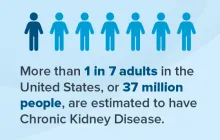
Chronic kidney disease, which affects 37 million Americans, can have serious health consequences for both patients and the health system. The condition also disproportionately affects members of racial and ethnic subgroups. AIR experts offer considerations for involving patients, families, and communities in the effort to address patient safety and disparities. ...
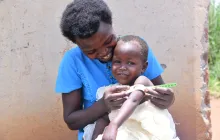
The Graduating to Resilience Activity’s goal is to graduate 13,200 extremely poor refugee and Ugandan households in Kamwenge district from conditions of food insecurity and fragile livelihoods to self-reliance and resilience. AIR has developed technical learning briefs covering the topics of gender, coaching, nutrition, and the graduation approach. ...
Increasing the rigor of courses taken in high school is a crucial part of education policy. However, existing knowledge about high school coursework is outdated. Using data from a recent nationally representative data set, this brief reports results that expand our knowledge base on the relationship between a rigorous coursework ...
Joseph A. Taylor directs intervention impact studies, syntheses of the effects of science education interventions, and contributes to AIR’s work on the What Works Clearinghouse (WWC).Dr. Taylor is currently a co-Principal Investigator of a US Department of Education funded grant (Education Innovation and Research program) that is studying the effects ...
More than 400 senior U.S. Department of Education leaders gathered in early May to discuss the importance of postsecondary education. Leveraging evidence scans conducted by AIR's Center for Applied Research in Postsecondary Education (CARPE), we offer four ways to invest more strongly in scaling and institutionalizing evidence-based strategies to improve ...
The tragic school shooting at an Uvalde, Texas, school initiated discussion over how to prevent future violent events. While there is no magic answer to reducing violence in our schools and communities, AIR’s David Osher and Sandra Williamson discuss evidence-based actions.