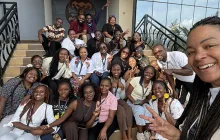
The Global Health Corps’ Africa Leadership Accelerator is a nine-month fellowship that helps emerging public health professionals build the skills, networks, and confidence to lead change from within the organizations and communities where they already work.
The AIR Elevating Youth Voices project set out to better understand how schools and community organizations can support young people who frequently interact with the justice system.
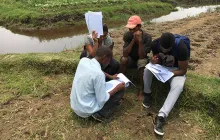
A wealth of evidence shows that large-scale, government-run cash transfer programs consistently improve food security and help people make investments to generate income. But we need a more solid evidence base that supports planning and programming decisions.
Early warning systems, like Famine Early Warning Systems Network (FEWS NET), may help decisionmakers and relief agencies plan for and respond to malaria risk, like they do for other humanitarian and public health crises.
AIR is inviting researchers, practitioners, developers, and organizations to share promising ideas and research directions that can strengthen health systems, improve population health, and advance responsible use.
AIR and the National League of Cities partnered to better understand how and why cities are adopting and implementing skills-based practices. Here’s what we’re learning.
Computer science education in public schools is the most effective way to cultivate necessary technology-based knowledge and skills in a systematic and widespread way. The Center for Evolving Computer Science Education at AIR aims to improve access to computer science education by building and using evidence. ...
The Youth Voices project—a Milwaukee, Wisconsin-based study launched by AIR in 2024 with support from the AIR Opportunity Fund—is taking a unique approach to coordinating school- and community-based services to help keep young people out of the criminal justice system: Having youth work with adult researchers to co-create, conduct, and ...