How Global Health Corps Builds the Networks Public Health Leaders Need
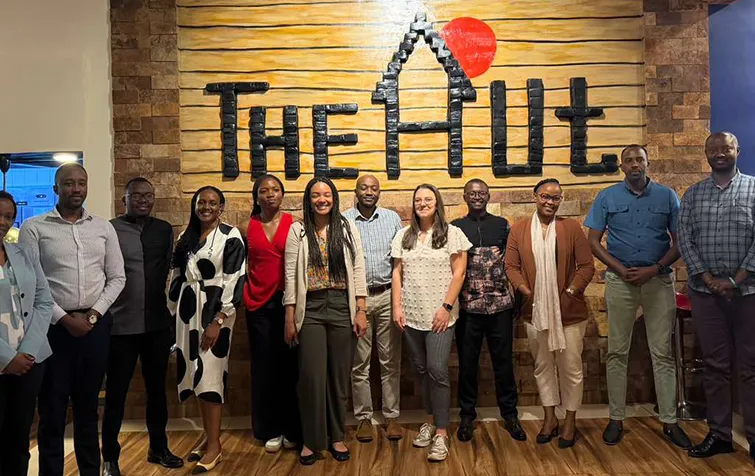
Photos: Global Health Corps fellows in Rwanda, Africa. Spring 2026.
Credit: Kwelin Pipkin.
No one becomes an effective public health leader alone. As health systems across Africa face growing demands, technical knowledge remains essential. But strong leadership also depends on trusted relationships, practical guidance, and peers who can help people navigate responsibility as it grows.
That is the idea behind Global Health Corps’ Africa Leadership Accelerator, a nine-month fellowship that helps emerging public health professionals build the skills, networks, and confidence to lead change from within the organizations and communities where they already work.
Developing Leaders Already Close to the Work
For 17 years, Global Health Corps (GHC) has supported more than 1,400 emerging professionals working on the front lines of public and global health in East and Southern Africa and the United States.
In 2024, with support from the AIR Opportunity Fund, GHC launched the Africa Leadership Accelerator. The nine-month fellowship serves public health professionals ages 21 to 35 who work full time in nonclinical roles in Malawi, Rwanda, Uganda, and Zambia.
Global Health Corps’ programs help emerging public health professionals build the skills, relationships, and confidence to lead change from within their organizations and communities. The AIR Opportunity Fund supports GHC’s Africa Leadership Accelerator and Alumni Program as part of its work to expand opportunity through workforce development and stronger community health and well-being.
The fellows are not preparing to enter the field someday; they are already contributing to health organizations and communities. Through leadership training, coaching, mentorship, and peer learning, the Accelerator helps them become more effective in those roles and prepare for greater responsibility.
GHC recognizes that technical knowledge alone is not enough to lead well. Public health professionals must also know how to communicate across teams, navigate uncertainty, make difficult decisions, and learn from people with different experiences. They also need relationships they can rely on as their responsibilities grow.
Building a Community Fellows Can Rely On
The strength of the GHC community was evident during the Accelerator’s midyear leadership conference earlier this year in Kigali, Rwanda.
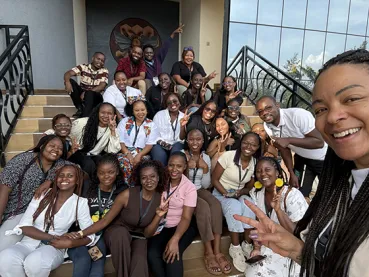
During a session on mentorship, fellows shared how difficult it can be to find guidance early in a career, particularly when entering a new role or navigating an unfamiliar organization. At one point, a fellow asked how to find a mentor in an organization where she did not know anyone. Almost immediately, others in the room began offering ideas, encouragement, and connections. The moment showed the program working in real time: a fellow named a challenge and the community around her became part of the solution.
For early-career professionals, this kind of network can shape more than a single workplace decision. Trusted peers and mentors can help individuals work through setbacks, recognize new possibilities, and see a long-term future for themselves in public health.
Turning Leadership Development Into Workplace Results
Fellows are putting what they learn into practice. A survey of the 30 fellows and their supervisors from the 2024-2025 cohort shows:
- 85% reported taking on additional leadership responsibilities;
- 93% said the program had improved or amplified their work;
- 100% said the accelerator contributed to their professional achievements; and
- 100% of supervisors deemed fellows as positive or critical to the success of their organizations.
These early indicators show that the Accelerator is influencing both how fellows grow and how they contribute at work. When public health professionals communicate more effectively, make stronger decisions, and take on greater responsibility, their teams are better equipped to serve communities.
Alumni offer a view of where that growth can lead. One alumnus now leads country operations for a health logistics organization in Rwanda, helping support the delivery of blood and medical supplies across the region. Another founded a pharmacy enterprise focused on expanding access to quality medicines.
Their paths are different, but both have assumed greater responsibility for services that people depend on. Seeing alumni in those roles also helps current fellows imagine what may be possible in their own careers.
Building the Support Leaders Need
Public health organizations need talented professionals who can take on greater responsibility, support stronger teams, and respond to changing community needs.
The Africa Leadership Accelerator shows that leadership development is not only about teaching individual skills. It is also about surrounding people with trusted peers and mentors, giving them opportunities to practice leadership, and helping them see what is possible for themselves in public health.
Through that support, Global Health Corps is helping early-career professionals build the relationships, judgment, and confidence to lead from within their organizations and strengthen the health systems their communities depend on.
About the AIR Opportunity Fund
The AIR Opportunity Fund supports community-led efforts to expand opportunity and improve lives. Backed by a $225 million commitment from AIR, the Fund provides funding, research, and hands-on partnership to help communities advance promising ideas and share lessons that can inform efforts in other places. Learn more.