Language of Instruction
Most children in low- and middle-income countries are in bilingual or multilingual educational contexts; yet, there is little evidence on how to successfully structure learning in these environments. AIR’s team of experts is at the forefront of conducting research and technical assistance to help solve this problem.
Our research includes rigorous mixed-methods evaluations; language mapping studies; language transitioning studies; monitoring, evaluation, and learning (MEL) platforms; evidence syntheses; and cognitive studies to better understand language’s role in improving foundational learning outcomes.
We also draw on well-established and continually emerging evidence to develop and implement AIR’s Foundational Learning Improvement Package (FLIP), which includes curricula review and development, teacher professional development for multilingual literacy teaching, structured pedagogy, and literacy assessments in diverse linguistic environments.
Key Projects
Blueprint for the Use of Evidence in Language of Instruction Decisions (BUILD)
Language is at the heart of improving foundational learning outcomes. AIR, in collaboration with the Gates Foundation, is developing an empirically grounded and politically feasible framework to support bilingual and multilingual foundational literacy and numeracy outcomes across low- and middle-income countries.

CEDIL Language Transition Evidence Synthesis
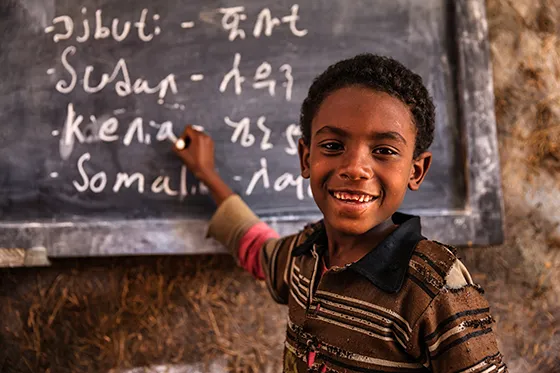
Over the last 50 years, schooling has expanded dramatically in most low- and middle-income countries (LMICs). However, while children are in school more than ever before in LMICs, on average, over 50% of them are not acquiring foundational literacy and numeracy skills. This systematic review examined the impact of language of instruction policies on literacy and biliteracy outcomes for primary school children across LMICs.
Facilitating Reading Acquisition in Multilingual Environments (FRAME) – India
Many students around the world grow up and go to school in multilingual environments, yet there isn’t enough evidence about how to effectively promote reading acquisition in linguistically diverse contexts. The FRAME study addresses this gap by examining the predictors of biliteracy acquisition in South India.
Language of Instruction Transition in Education Systems (LITES)
There is significant evidence that learning in a child’s first language promotes consistent learning gains; however, little is understood about how education systems should effectively add or transition instruction from a first language to a second language and sometimes additional languages. The LITES study aims to fill this gap.

Professional Development for Teachers Working in Multilingual Contexts of Francophone Africa
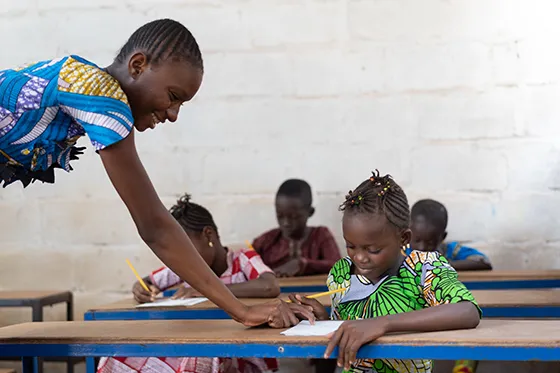
This project aims to improve teacher capacity to support multilingual learning in Cote d’Ivoire, the Democratic Republic of Congo, and Senegal through existing educational systems in each country. Funded by KIX, and in partnership with Dalberg, we will adapt and evaluate the effectiveness and scalability of AIR’s Foundational Learning Improvement Package on teacher and student outcomes in multilingual contexts in these three countries.
Supporting Multilingual Learning in Francophone Africa
The Global Partnership for Educations Knowledge and Innovation Exchange has commissioned AIR to generate and mobilize research to support language of instruction policies and practices in Francophone Africa, specifically in the Democratic Republic of Congo, Senegal, and Cote D’Ivoire. AIR’s focus is on generating evidence about when children are ready to transition from local languages to French, and to mobilize and use that knowledge among key stakeholders.

Vamos Ler! (Let's Read!) Mozambique
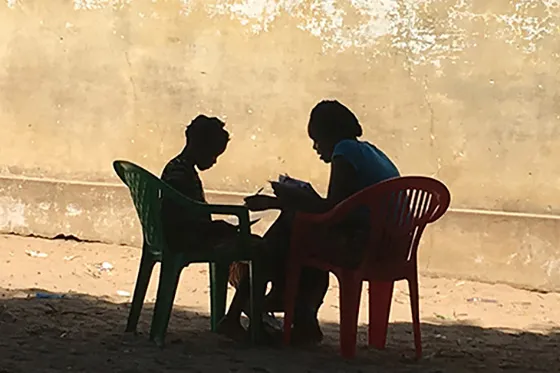
To respond to Mozambique’s challenges with literacy teaching and learning, the U.S. Agency for International Development funded a five-year program, Vamos Ler! (Let’s Read!). The program’s goal was to strengthen the Mozambican government’s ability to ensure that Grades 1 to 3 students in Nampula and Zambézia provinces can achieve grade-level fluency and comprehension in local languages.