AIR Reads: A Sampling of Books by AIR Board Members, Fellows, and Staff Members
Making the world a better and more informed place drives AIR board members, fellows, and staff. These books examine pressing issues in depth, drawing on the best research available to understand complex challenges and offer practical solutions.
Explore books by:
AIR Board Members
Nancy Cantor

Our Compelling Interests: The Value of Diversity for Democracy and a Prosperous Society
Nancy Cantor and Earl Lewis (Eds.), Princeton University Press (2016)
This inaugural volume of the Andrew W. Mellon Foundation’s Our Compelling Interests series illustrates that a diverse population offers communities a prescription for thriving now and in the future. The landmark essay collection, co-edited by Rutgers University-Lewis Chancellor Nancy Cantor, examines the demographic transitions shaping American life and presents a broad-ranging look at the value of diversity to democracy and civil society.
Manuel Pastor
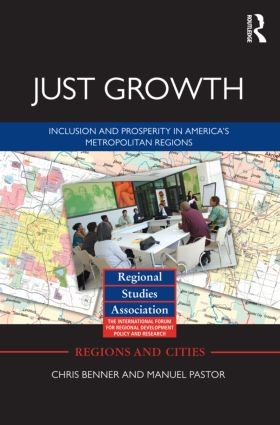 Just Growth: Inclusion and Prosperity in America's Metropolitan Regions
Chris Benner and Manuel Pastor, Routledge (2012)
Breaking new ground in its innovative blend of quantitative and qualitative methods, the book argues that sustainable growth, based on economic development and regional equity, is indeed possible. While offering specific insights for regional leaders and analysts of metropolitan areas, the authors also draw a broader—and timely—set of conclusions about how to scale up these efforts.
AIR Institute Fellows and AIR Scholars
David Hayes-Bautista
 La Nueva California: Latinos from Pioneers to Post-Millennials
David Hayes-Bautista, University of California Press (2017)
This study, based on decades of data and spanning a hundred years, paints a vivid and energetic portrait of Latino society in California. Hayes-Bautista is a distinguished professor of medicine at the University of California, Los Angeles.
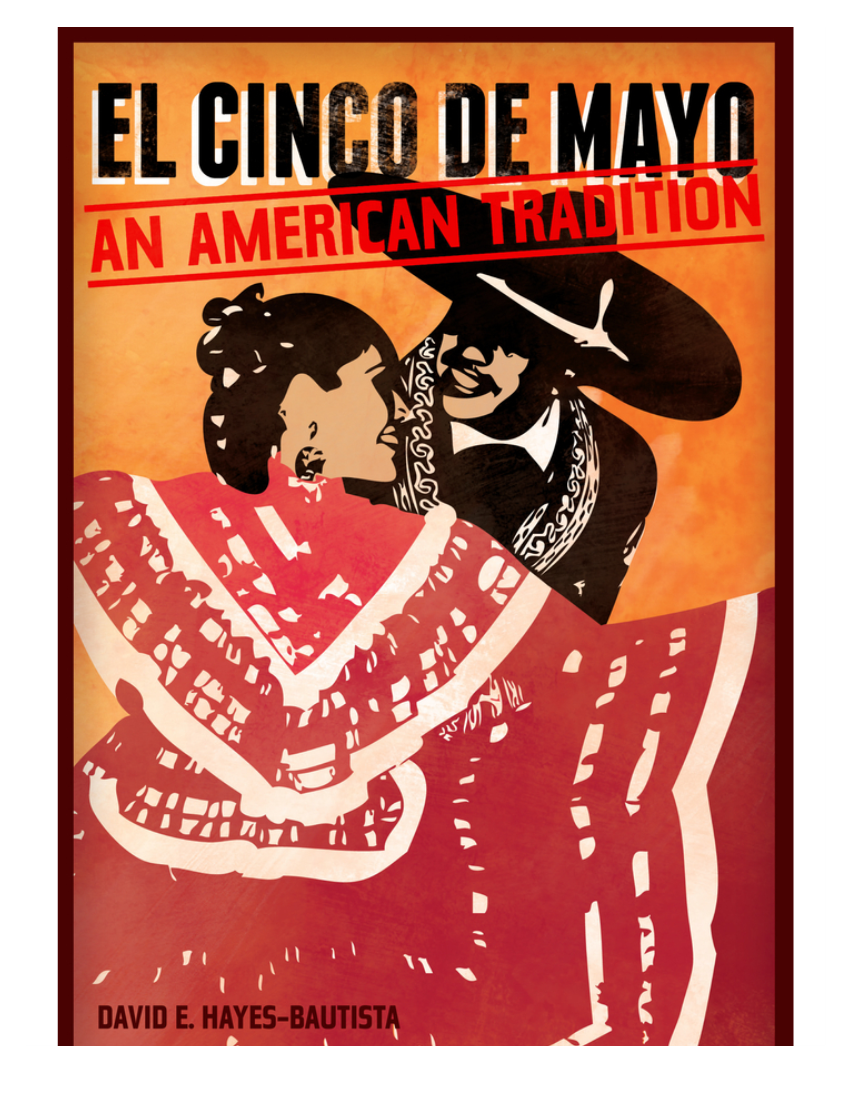 El Cinco de Mayo: An American Tradition
David Hayes-Bautista, University of California Press (2012)
This book traces the roots of the distinctly American celebration of Cinco de Mayo, a holiday with meanings that have shifted over time to reflect the aspirations of the Latino community.
Jack Buckley
 Measuring Success: Testing, Grades, and the Future of College Admissions
Jack Buckley, Lynn Letukas and Ben Wildavsky (Eds.), Johns Hopkins University Press (2017)
Once touted as the best way to compare students from diverse backgrounds, standardized tests like the SAT and ACT have increasingly come under scrutiny for potential bias toward traditionally privileged groups. This book, co-edited by AIR’s Jack Buckley, senior vice president of research and evaluation, investigates the research and policy implications of emerging test-optional college admissions practices and considers both sides of the debate.
Harry J. Holzer
 Making College Work: Pathways to Success for Disadvantaged Students
Harry J. Holzer and Sandy Baum, Brookings Press (2017)
Many disadvantaged college students face hurdles in completing coursework, earning valuable credentials, paying for college and keeping up with college debts. This book, co-authored by Georgetown University professor of public policy Harry Holzer, reviews potential causes, as well as promising policy solutions.
 Where Are All the Good Jobs Going? What National and Local Job Quality and Dynamics Mean for U.S. Workers
Harry J. Holzer, Julia I. Lane, David B. Rosenblum and Frederik Anderson, Russell Sage Foundation (2011)
This book examines the structural changes in the U.S. economy and addresses the most-pressing questions faced by today’s workers: Can the labor market still produce jobs with good pay and benefits for the majority of workers, and will these jobs remain stable over time?
Jennifer O’Day
Opportunity for All: A Framework for Quality and Equality in Education
Jennifer O'Day & Marshall S. Smith, Harvard Education Press (2019)
The book show how strategies for pursuing educational quality and equal outcomes for all students can be linked, presenting an ambitious idea of the future of American education and a comprehensive theory of change for enacting that vision.
 Education Reform in New York City: Ambitious Change in the Nation’s Most Complex School System
Jennifer O’Day, Catherine S. Bitter, & Louis M. Gomez (Eds.) Harvard Education Press (2011)
Offers insights into the strengths and weaknesses of the City’s ambitious “Children First” school reform efforts conducted from 2002 through 2010 under the leadership of Joel Klein, the former chancellor. The book addresses key aspects of urban systemic reform, including governance, accountability, instruction, finance, choice and competition, and student outcomes.
AIR Staff
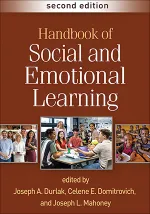
Deborah Moroney, Jessica Newman, Margarita Olivera-Aguilar, and Samuel Rikoon
Handbook of Social and Emotional Learning, Second Edition
Joseph A. Durlak, Celene E. Domitrovich, and Joseph L. Mahoney, Eds. (2024)
This extensively revised second edition on social and emotional learning (SEL) research and practice features all-new and thoroughly updated chapters. SEL scholars describe state-of-the-art interventions that build students' competencies for managing emotions, showing empathy for others, forming supportive relationships, and making responsible decisions. The scientific underpinnings of SEL are explored and its impact on academic achievement and behavior is examined. The Handbook discusses ways to assess SEL and design effective, developmentally and culturally informed programs for students in preschool through secondary school settings and beyond.
Markus Broer
 Socioeconomic Inequality and Educational Outcomes
Markus Broer, Yifan Bai, and Frank Fonseca, Springer (2019)
The positive association between family socioeconomic status and student achievement is well documented, but there is limited research into how this relationship differs across context and country and whether it has changed over time. This e-book uses a unique measure of socioeconomic status to examine how inequality of educational outcomes has changed over the 20-year Trends in International Mathematics and Science Study (TIMSS) period (1995–2015). It also looks at the extent to which the performance of students from disadvantaged backgrounds has improved in 13 countries around the world.
Alison Gandhi
 Essentials of Intensive Intervention
Rebecca Zumeta Edmonds, Alison Gruner Gandhi, and Louis Danielson (Eds.), Guilford Press (2019)
Few evidence-based resources exist for supporting elementary and secondary students who require intensive intervention. Filling a gap in the field, this book brings together leading experts to present data-based individualization (DBI), a systematic approach to providing intensive intervention which is applicable to reading, math, and behavior. Readers are guided to access and utilize numerous free online DBI resources—tool charts, planning materials, sample activities, downloadable forms, and more.
Deborah Moroney
 Social and Emotional Learning in Out-of-School Time: Foundations and Futures
Elizabeth Devaney and Deborah Moroney, Information Age Publishing (2018)
In out-of-school time settings, educators have an opportunity to foster social and emotional learning in engaging activities. This volume provides an overview of social and emotional learning in out-of-school time from field experts in practice, policy, and research.
Deborah Moroney, et al.
 Creating Safe, Equitable, Engaging Schools: A Comprehensive Evidence-Based Approach to Supporting Students
David Osher, Deborah Moroney, and Sandra Williamson (Eds.), Harvard Education Press (2018)
By taking a continuous improvement approach, Creating Safe, Equitable, Engaging Schools integrates the collective wisdom of over 30 AIR experts, as well as research and field leaders. The volume helps school leaders make sense of the various evidence-based resources and frameworks designed to support the whole child.
Jennifer Pierce
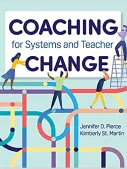
Coaching for Systems and Teacher Change
Jennifer D. Pierce and Kimberly St. Martin (2022)
Coaching between educators is one of the best ways to improve outcomes for all learners. This resource is a comprehensive guide to what effective coaching looks like across the PreK-12 grade span and how to conduct powerful coaching cycles with teachers and teams.