Meet the Expert: Terris Ross
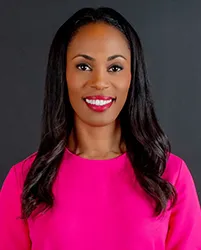
Terris Ross leads the AIR Opportunity Fund’s education portfolio. In previous roles at the U.S. Department of Education, she designed and conducted educational studies. In addition to her work at AIR, she is a member of the United Way of Greater Atlanta Gwinnett Advisory Board.
POSITION: Managing Director, AIR Opportunity Fund
AREAS OF EXPERTISE: Education policy research, quantitative research methodology, K-12 accountability
YEARS OF EXPERIENCE: 15+
Q: What piqued your interest in this career in education research?
Terris: In graduate school, I fell in love with—believe it or not—item response theory, and in particular, differential item/bundle functioning. It’s a branch of psychometrics that essentially considers fairness in educational assessments. It allowed me to examine, through this technical lens, why students of equal ability may perform differently on certain test items; it allowed me to address bias in standardized testing, which has major implications for grade promotion and college admissions.
Q: Before graduate school, you worked as a high school mathematics teacher. How does that affect your work now?
Terris: I was a teacher for only four years, but they were formative. When I conduct research, in the back of my mind, I’m always thinking about implementation. Researchers are sometimes guilty of saying, "Oh, here's something that'll work," without worrying about logistics and implementation. That, usually, is where things get messy! I think I’m aware of and sensitive to the demands on teachers’ time. Having been in those trenches, I try to consider the practical implications for all this theoretical work.
Q: You have evaluated many educational improvement programs. What common factors distinguish the effective ones?
Terris: I first want to ask—effective for whom, and under what conditions? For too long, we researchers have been obsessed with average treatment effects. We analyze programs based on whether they’re working for some “average” student, when there is no such thing. I’m excited that this is changing: More attention is being paid to powering studies to adequately detect moderator effects, like a student’s race or where they live or attend school.
Programs that use longitudinal data to follow participants over time, especially those that leverage administrative datasets, are better able to make a case for program effectiveness. The presence of large datasets allows evaluators to consider both direct and indirect effects. Beyond that, a program is only as effective as its implementation. What does an "effective" program, on paper, look like when the rubber hits the road?
Q: What drew you to the AIR Opportunity Fund? Which accomplishments make you proud?
Terris: I was drawn to two things. The first was the opportunity to use my research skills to advance evidence in ways that help improve lives, especially in education and the workforce. I honestly love research and am equally passionate about expanding educational opportunities, so that was a perfect marriage of my policy and practice interests.
The second was the opportunity to influence how research and technical assistance are applied to address issues at the intersection of education, workforce, and community through the Opportunity Fund’s grant-making mechanism. The Opportunity Fund is AIR’s mission in action.
I would be remiss if I didn't also mention the Pipeline Partnership Program, a career development initiative designed to prepare graduate students for successful careers in behavioral and social science research. Through partnerships with leading universities in the United States and Africa, P3 provides students with mentorship, hands-on research experience, and training in advanced methodologies—equipping them with the skills to address complex societal challenges.
Q: Over your time in the field, how has education research in the U.S. evolved? What has remained constant?
We tend to want results quickly, so we don't really give interventions or strategies a chance to succeed before we start hunting for the next silver bullet.
Terris: In the last 20 years, the research community has shifted from assuming we could find the answers to explain educational outcomes through our sophisticated statistical models. Now, new approaches focus on local context and actively involve those closest to the issues that we're trying to address.
Unfortunately, what has remained constant is our short attention span. We tend to want results quickly, so we don’t really give interventions or strategies a chance to succeed before we start hunting for the next silver bullet. But that’s human nature.
Q: How do you see your work in education intersecting with health care, workforce, or housing?
Terris: At the Opportunity Fund, we're challenging ourselves to stop considering them in silos and to promote a cross-sector approach to addressing these systems.
I’m particularly excited about our Evidence and Demonstration Hub. We’re envisioning large-scale, place-based grantmaking, which will allow us to invest deeply in entire communities. The grantees might be community-based organizations focused on education outcomes, but they would also be required to address at least one other sector. For example, maybe a community wants to pilot a Guaranteed Income Program for low-income residents that includes training and technical assistance from community mentors who support parents of children 3-5 years of age in enhancing their parenting skills, fostering early literacy development in children, and creating a two- to five-year plan for workforce development training.
Q: Where can we find you on a typical Saturday?
Terris: On Saturdays, my husband is in charge of our son, Jackson, so you can usually find me at brunch, eating southern fare with my twin sister. We live in the Atlanta metro area, so there’s no shortage of great restaurants!
Q: What book would you recommend to anyone?
Terris: Why We Can’t Wait by Martin Luther King, Jr., which includes “Letter from a Birmingham Jail.” Obviously, it’s not a new title, but I just read it recently, and it’s giving me so much energy around the Opportunity Fund. Even though it’s almost 60 years old, many of his calls to action are still so relevant.