Utilizing the Youth Reentry Simulation to Drive Policy and Practice Change

Returning to the community after incarceration is complex. Young people often face major barriers like finding housing, getting to school or work, securing employment, and reconnecting with family and support systems. When these challenges go unmet, the risk of setbacks and further justice involvement increases.
Reentry simulations have long helped adults understand these realities, but there has been a gap in tools designed specifically for young people. To address this challenge, the AIR team, in collaboration with the Office of Juvenile Justice and Delinquency Prevention (OJJDP) through the Youth Reentry Training and Technical Assistance Center (YRTTAC), developed a youth reentry simulation.
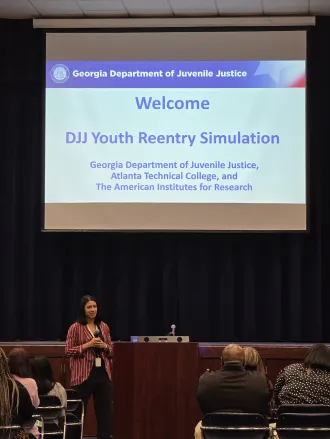
Until 2025, YRTTAC functioned as a national center where AIR provided technical assistance and customized consulting services to over 50 Second Chance Act youth reentry grantees. The youth reentry simulation was first implemented in partnership with Georgia’s Department of Juvenile Justice in February 2026 (as shown).
This interactive, hands-on experience is designed to reflect the real challenges and key moments young people face as they transition from juvenile justice settings back into their communities. The simulation builds understanding, sparks conversation, and helps participants see reentry through a youth lens.
The experience is designed for practitioners, policymakers, educators, system leaders, and community members who want a deeper understanding of youth reentry and practical ways to support it.
Rooted in Values and Real Experience
The Youth Reentry Simulation is grounded in lived experience and shaped by people with personal and professional backgrounds in the youth justice system. It centers youth voice and real-world conditions to encourage empathy, reflection, and collaboration.
The Simulation’s core values include:
- Authenticity. The simulation reflects the real emotional and practical experiences of young people reentering their communities, based on direct system involvement.
- Individualization. Every reentry journey is different. The simulation highlights how personal circumstances, family dynamics, community context, and system involvement shape each young person’s path.
- Empathy. Participants experience moments of confusion, frustration, fear, and loss of control, alongside the relief and confidence that come from meaningful support. These moments help build a deeper understanding of what youth experience during reentry.
- Perspective. Voices of people with direct experience in the system are central to the design and facilitation of the simulation, ensuring those perspectives are valued and heard.
What Participants Gain
Reentry looks different across states, communities, and individual experiences. The simulation creates space for open, interactive conversation that helps communities:
- Strengthen collaboration across systems;
- Identify gaps and barriers in reentry services;
- Improve coordination and support for youth and families; and
- Explore practical, actionable changes to policies and practices.