PROPEL Center: Promoting Resilience, Opportunity, and Progress in Employment and Learning

Projects | PROPEL Center
The PROPEL Center helps to create a stronger workforce by testing and applying proven workforce strategies across different settings, tailored to local conditions and for various groups. To accomplish these goals, PROPEL is focused on four key areas of work:
Learning from the Evidence
AIR experts investigate the most effective practices and policies for increasing long term employment and earnings for workers and how these practices can be scaled to reach more communities.

Implementation Evidence Review of Sectoral Programs
The PROPEL Center team conducted a thorough review and analysis of sectoral program implementation to identify effective practices, challenges and key insights.

A Systematic Review of Sectoral Workforce Programs
In partnership with AIR’s Methods of Synthesis and Integration Center (MOSAIC), the PROPEL Center researchers conducted a systematic review and meta-analysis of the evidence on sectoral and related workforce training approaches.
Strengthening Community College Partnerships
We explore how and why programs work effectively in improving their students’ employment outcomes, so that those insights can be applied more broadly among community colleges nationwide.
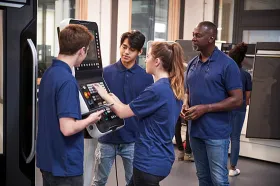
Bolstering Workforce Pathways at City Colleges of Chicago
PROPEL Center researchers and technical assistance experts worked with the City Colleges of Chicago to strengthen its Centers of Excellence model by adapting and testing strategies from best-in-class sectoral programs to help millions of Americans gain the skills needed to access livable wage jobs.

Identifying the Best Community Colleges for Workforce Training
PROPEL partnered with Harvard University to find community colleges that are most effective at providing training for high-wage jobs.
Expanding Sector Strategies and Effective Sectoral Training
We are working with top programs to enhance their effectiveness and broaden their reach in communities.
Boosting Readiness for Tech Careers with Intelligent Tutoring: A Learning Partnership with Per Scholas
AIR and Per Scholas, a no-cost occupational skills training program that prepares graduates for IT and other tech careers, have established a learning partnership to explore how best to provide online and/or hybrid training of its students.

Improving Career Readiness Through Skills-Based Measurement: A Collaboration with Year Up United
AIR partnered with Year Up United to co-develop assessment tools that can more systematically identify students’ workplace readiness skills and needs, expanding the Year Up United model to provide more tailored support. Year Up United is dedicated to expanding access to economic opportunity for young adults ages 18 to 29 through unique Career Pathways.
Supporting Individuals and Communities in Economic Empowerment
We are dedicated to learning what works to help integrate individual into vibrant communities.

Connecting Opportunity Youth to Strong Pathways to Adulthood and Career Success
We are committed to finding ways to effectively meet the needs of all opportunity youth, including the most vulnerable who are often screened out of the best known programs.

Strengthening Workforce Training and Reintegration Supports for Justice-Involved Individuals
We aim to find ways to help many young adults involved in the justice system connect to support that leads to good jobs and successful reintegration into society.

Helping Adults with Foundational Skill Needs Access Pathways to Economic Mobility
We are working to identify promising programs that integrate academic and workforce skills training to help millions of adults with foundational skill needs access high-wage, high-demand occupations.

Helping Displaced Workers Find New Pathways in the Future of Work
AIR researchers conducted a landscape analysis to assess the knowledge base and understand the availability of effective supports for displaced workers.