The Center for Economic Evaluation is committed to rigorous and transparent economic analyses that generate evidence-based insights for more effective systems, policies, and practices.
Kimberly (Kimmel) Imel is a researcher at AIR, with over five years of experience providing subject matter expertise and maintaining quality assurance for the National Assessment of Educational Progress U.S. history and civics assessments. She also has over 2 years of experience supporting social studies-focused work on individual state contracts. Imel ...
Students who receive high-quality social studies instruction are likely to develop skills that will help them make civic contributions in the future. Recognizing these needs in the field, AIR partnered with EdReports to develop evidence guides that educational professionals across the nation can use to identify high-quality instructional materials for ...
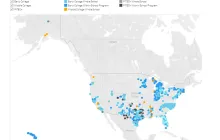
A type of dual enrollment program, Early Colleges often offer students the opportunity to earn an associate's degree or up to two years of college credits toward a bachelor’s degree in high school—at no or low cost to students. Explore this map, which provides the location and key information about ...
For adult learners with dependent children, pursuing postsecondary education is complicated. An AIR study explores the fact that better supporting adult learners means making significant changes to the learner experience at postsecondary institutions, and in this blog the researchers focus specifically on findings that are particularly meaningful for parenting adult ...
Allison Gilmour has extensive experience in special education policy analysis, focusing on improving access to effective instruction for students with disabilities by studying special educator labor markets and teaching quality. Dr. Gilmour has methodological expertise in quantitative methods, often using data from state longitudinal data systems or nationally representative surveys. ...
Using data from the 2018 NAEP grade 8 civics assessment, this study investigates disparities in access to civics content and effective instructional approaches, highlighting disparities along a range of dimensions including student, school, and state characteristics. The findings conflict with most of the prior evidence regarding disparities, showing higher reported ...
The Methods of Synthesis and Integration Center (MOSAIC) conducts systematic literature reviews and meta-analyses, and creates methodological improvements by conducting simulation studies and deriving new statistical methods, in the areas of education, health, international development, social welfare, and the workforce. ...
The Workforce Innovation and Learning team at AIR helps government, philanthropic, and non-profit decisionmakers create the most impact with their investments by testing and scaling evidence-driven innovation in workforce policies and programs.
In this blog post, Katie Rich discusses the importance of using micro-credentials to train teachers to teach computer science, using Wyoming as an example.