Medicaid Work Requirements and State Readiness
For states navigating work requirements across Medicaid, SNAP, TANF, and other public benefits
Federal policy is reshaping Medicaid, SNAP, and other public benefit programs. As states redesign eligibility and reporting systems, millions of people will need to navigate new requirements to maintain access to benefits.
For state agencies, legislators, advocates, and community organizations, the challenge is clear: implement these changes effectively while minimizing unnecessary coverage and benefit loss.
AIR combines policy expertise, implementation research, and data-driven insights to help states translate new requirements into effective practice, minimizing unnecessary coverage and benefit loss for eligible individuals.
Understanding the Current and New Requirements
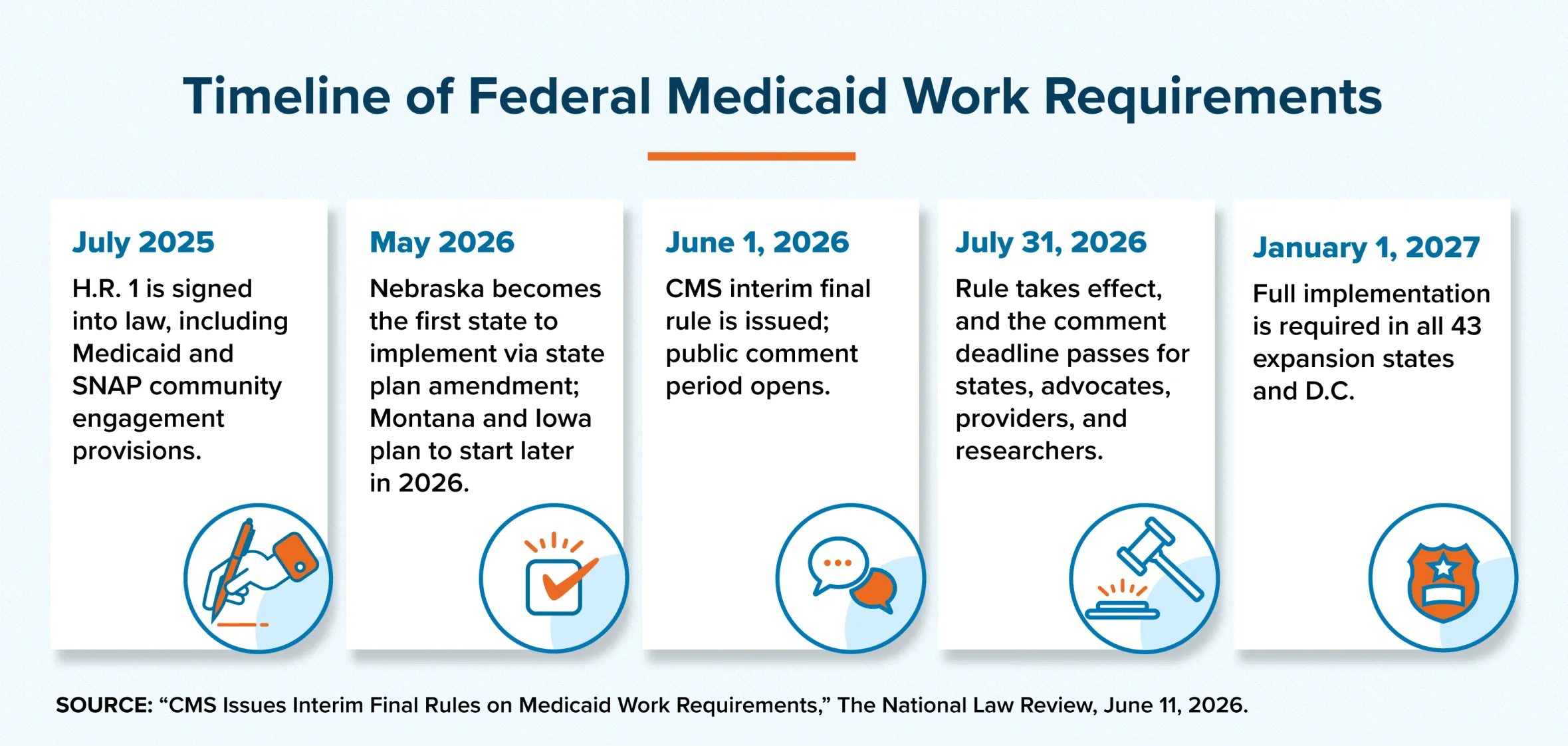
On June 1, 2026, the Centers for Medicare & Medicaid Services (CMS) issued an interim final rule implementing Medicaid community engagement (work) requirements for Medicaid expansion for adults ages 19–64. The rule implements provisions required under H.R. 1, the One Big Beautiful Bill Act.
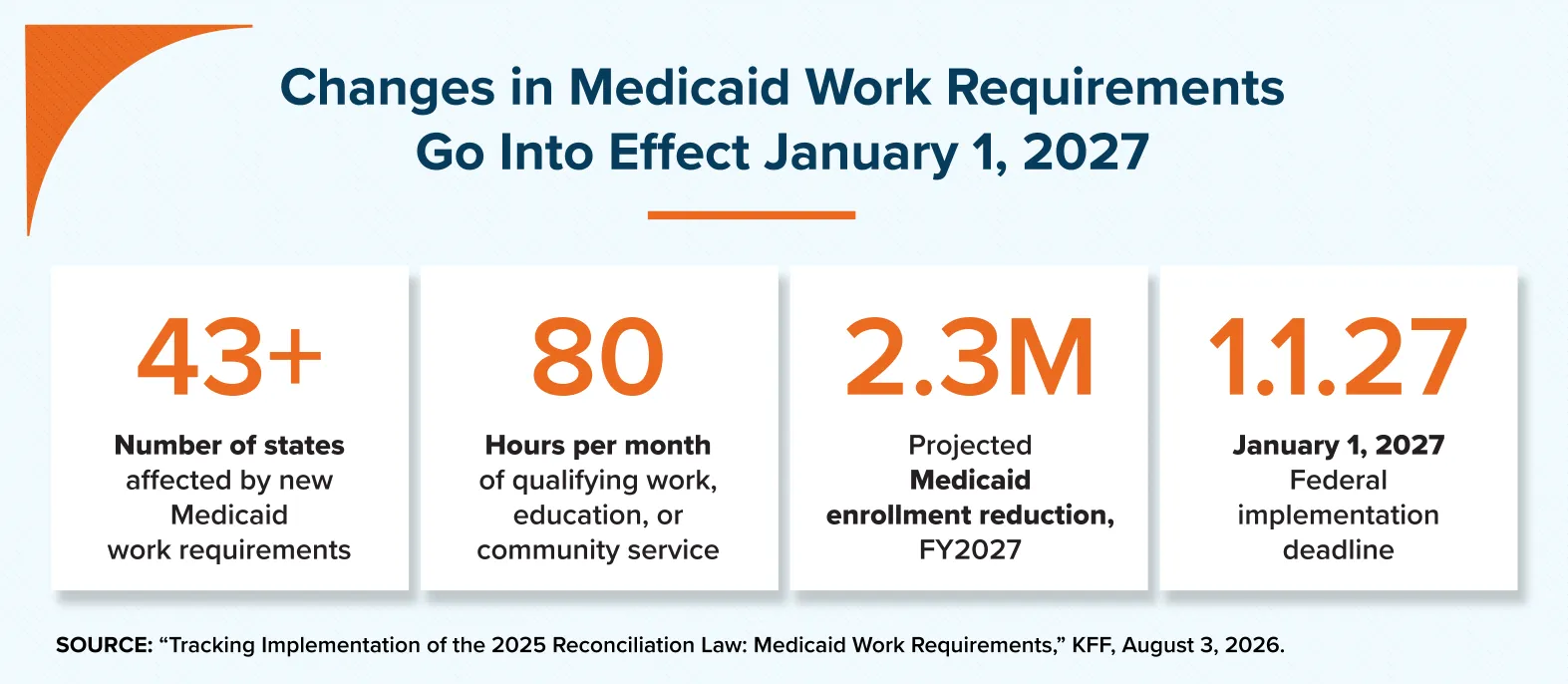
- The policy affects the 43 states and the District of Columbia that expanded Medicaid under the Affordable Care Act (ACA).
- The rule takes effect July 31, 2026 and full implementation is required starting January 1, 2027.
- Qualifying activities include employment, education, job training, and volunteer or community service at a minimum of 80 hours per month.
- H.R. 1 also includes community engagement provisions affecting SNAP participants. Learn more from CMS: Medicaid Community Engagement Requirement Interim Final Rule.
January 1, 2027, is approaching quickly. States, legislatures, advocates, and community partners have urgent decisions to make about how to implement new work requirements, verify compliance, and avoid unnecessary coverage or benefit loss for people who are working, exempt, or otherwise eligible for benefits.
What the Evidence Shows: Implementation Matters
What determines whether eligible people keep their benefits? Evidence from Arkansas and Georgia work requirements, the Medicaid Unwinding, and years of SNAP and TANF research points to a clear answer: implementation matters.
The encouraging news is that states do not have to wait for new legislation to improve results. They can act now to strengthen systems, reduce administrative burden, and help eligible individuals remain connected to benefits.
Here’s what we know about quality implementation and how AIR can help:
Work with AIR
As states prepare for the implementation deadline on January 1, 2027, they face critical decisions about program design, technology, outreach, workforce supports, compliance monitoring, and legislative reporting.
AIR supports organizations throughout the implementation life cycle, from planning and assessment to real-time monitoring, evaluation, and reporting. We partner with state agencies, legislatures, federal agencies, advocacy organizations, and community-based partners to deliver research, technical assistance, and evidence-based guidance on Medicaid, SNAP, TANF, workforce development, benefits cliffs, and broader safety-net policy implementation.