Projecting and Modeling Malaria Risk
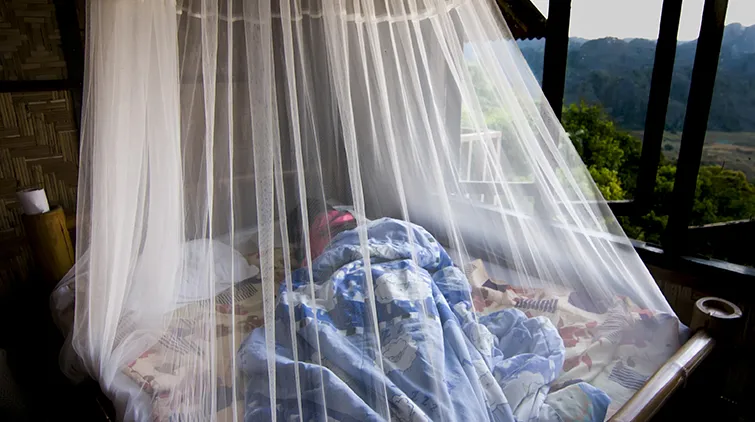
Malaria remains one of the most pressing global health challenges, with an estimated 282 million cases and 610,000 deaths worldwide in 2024. Sub‑Saharan Africa bears the greatest burden of this disease.
Despite major progress in malaria eradication, gaps in coverage of interventions, coupled with the ineffective targeting of programs, continue to undermine international elimination efforts.
Progress and Persistent Gaps in Malaria Control
Interventions such as insecticide‑treated nets (ITNs), indoor residual spraying, and vaccines have helped to reduce the incidence of malaria to a great extent. Estimates suggest that between 2000 and 2015, the scale‑up of interventions like ITNs, indoor residual spraying, and vaccines contributed to reducing the global malaria death rate by half.
Mortality rates have declined by an additional 7.4 percent over the last nine years. However, funding shortfalls and uneven progress highlight the need for smarter, more adaptive tools to guide the allocation of resources to prevent malaria.
Malaria early warning systems (EWS) could contribute to this objective by improving how risks are identified and managed.
The Role of Malaria Early Warning Systems
EWS have the potential to transform how resources are allocated, particularly in settings facing climate variability, limited funding, and competing health priorities. However, realizing this potential requires that malaria EWS evolve into practical and sustainable tools that can be used routinely by governments and partners.
The next phase of malaria EWS development requires models that are:
- Co‑created with governments;
- Integrate malaria expertise with advanced analytics; and
- Include capacity building to ensure long‑term use and sustainability.
Funders and policymakers play a critical role in enabling this shift by prioritizing investments that support collaboration, adaptability, and usability.
AIR’s Approach to Malaria Projection and Modeling
AIR is committed to advancing malaria modeling and early warning capabilities through the development of projection models that incorporate country‑specific parameters within a standardized, cross‑country framework. This approach ensures consistency and comparability while honoring local context, lessons learned, and country ownership.
Through this work, AIR supports the creation of more accurate malaria projection models and strengthens national capacity to sustain and use malaria early warning systems over time.