Evaluations of the Nutritional Improvements Through Cash and Health Education (NICHE) Program
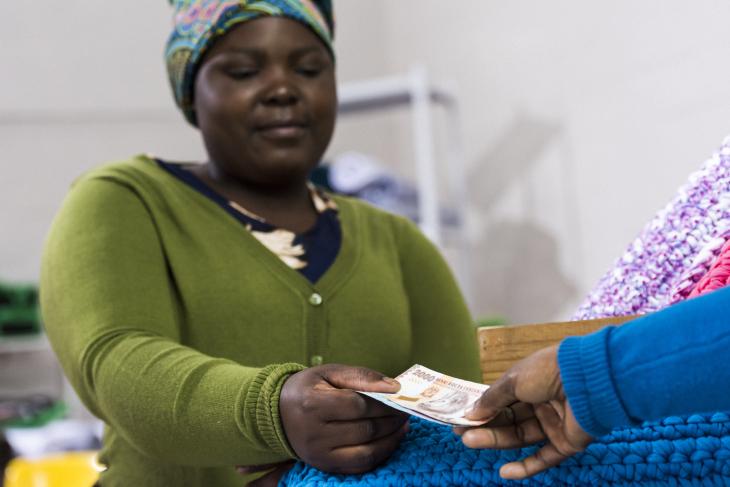
Kenya faces overlapping child well-being challenges. About 2 million children experience stunted growth due to undernutrition, while child protection programs remain essential to safeguard vulnerable children from violence, exploitation, and neglect.
To address these challenges, the Government of Kenya, with support from UNICEF, developed and implemented the Nutrition Improvements through Cash and Health Education (NICHE) II Program. The program is part of the Kenya Social and Economic Inclusion Project (KSEIP), which seeks to strengthen social protection services for poor and vulnerable households. Launched in 2019 in five counties, NICHE II combines a cash top-up component with nutrition and child protection services to foster resilience and improve well-being among households living in poverty. The program complements existing social safety nets in Kenya and provides additional cash support and services to households with pregnant women and children under the age of three.
AIR's Mixed-Methods Evaluations of NICHE II
UNICEF Kenya, in collaboration with the Government of Kenya, contracted AIR in 2021 to conduct a mixed-methods formative evaluation of NICHE II. In 2024, UNICEF again engaged AIR to conduct a process evaluation and cost analysis.
The formative evaluation identified and documented lessons learned from the inception and early implementation phases of NICHE II and established a baseline against which the program's future outcomes and impacts could be assessed.
The process evaluation and cost analysis measured program progress and cost efficiency and generated evidence to inform future implementation and expansion efforts.
The Government of Kenya and UNICEF are now scaling up NICHE II to additional counties. AIR's findings and recommendations helped inform program improvements, including an increase in benefit levels for participating households in need.