Detroit Enhanced Reentry Project

Each year across the U.S., roughly 650,000 people leave prison and return home. Individuals sentenced to life without parole before age 26—known as an Emerging Adult-Life Without Parole (EA-LWOP) sentence—have an opportunity to reenter communities because of justice system reforms. These individuals, however, face unique challenges with re-entry. Many of these challenges stem from having been incarcerated during critical developmental periods with minimal preparation for reentry.
The Detroit Enhanced Reentry Project seeks to understand the experiences of those with EA-LWOP sentences and identify ways to better support their transition back into society. Michigan—along with Pennsylvania, Louisiana, and Florida—accounts for over 55% of all juvenile life without parole sentences nationwide.
Exploring the Effects of Life Sentencing on Emerging Adults
AIR is leading a study, using ethnographic techniques, to explore the developmental, psychological, and social impacts of life sentencing on emerging adults. Through immersive life history interviews and data analysis, the project will focus on the challenges and successes of EA-LWOP individuals who have reintegrated into society after prison. AIR experts will also incorporate perspectives from legal system professionals and community stakeholders.
Key findings from the project will inform a policy and practice framework, offering actionable recommendations for corrections agencies, service providers, and communities. The project aims to shift how systems prepare individuals for life after incarceration—highlighting opportunities for growth, contribution, and healing.
AIR is collaborating with local partners, including the University of Michigan-Detroit Center; formerly incarcerated consultants; and justice-based organizations. Findings will be shared through community forums and national conferences, with the goal of sparking dialogue and driving change.
Issue Brief: Reentry After Serving Life Without Parole for Individuals Sentenced as Juveniles and Emerging Adults
This brief draws on lived experience, developmental science, and qualitative research to highlight:
The long-term impacts of incarceration during critical developmental years
The lasting consequences of disrupted development, the need to adapt to prison environments, and exposure to trauma
The need for developmentally responsive, trauma-informed reentry systems
The findings point to a clear opportunity: reentry policy and practice must evolve to support stability, dignity, and long-term success for this unique population.
Detroit Enhanced Reentry Project Community Forum Spotlight
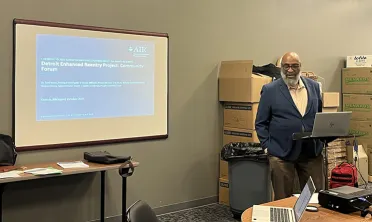
On October 23rd and 24th, The Detroit Enhanced Reentry Project hosted two community forums in midtown Detroit, Michigan. The forums served as a space for justice-impacted individuals, reentry service providers, family members, community leaders and criminal legal professionals to discuss the unique challenges of EA-LWOP.
Through guided discussions facilitated by the AIR team (Joe Williams, senior TA consultant, is seen presenting, above), participants identified five critical areas of need—mental health support, economic empowerment, basic needs, community belonging, and individualized reentry navigation.
In addition to identifying needs, the AIR team prompted attendees to outline actionable strategies for how organizations and community members could contribute to addressing these needs. Recommendations included:
- Promoting barrier-free access to mental health services, housing, employment, and education;
- Strengthening pre-release planning coordination; and
- Advocating for fair chance housing.
Attendees emphasized that the most promising strategies would rely on trauma-informed practices, include the experiences of EA-LWOP, and encourage cross-sector collaboration.
To support these efforts, the project team mapped existing Detroit and other Michigan resources such as vocational training, mental health centers, housing programs, and mentorship initiatives. View the Community Forum Resources.
This information can serve as a resource to connect justice-impacted individuals and their families to available reentry supports. The project team is deeply grateful to our hosts, Hope Prison Ministry and Catholic Charities of Detroit and all participants for their invaluable contributions, insights, and commitment to shaping a more equitable and supportive reentry landscape.