Baseline Evaluation of Zara Mira
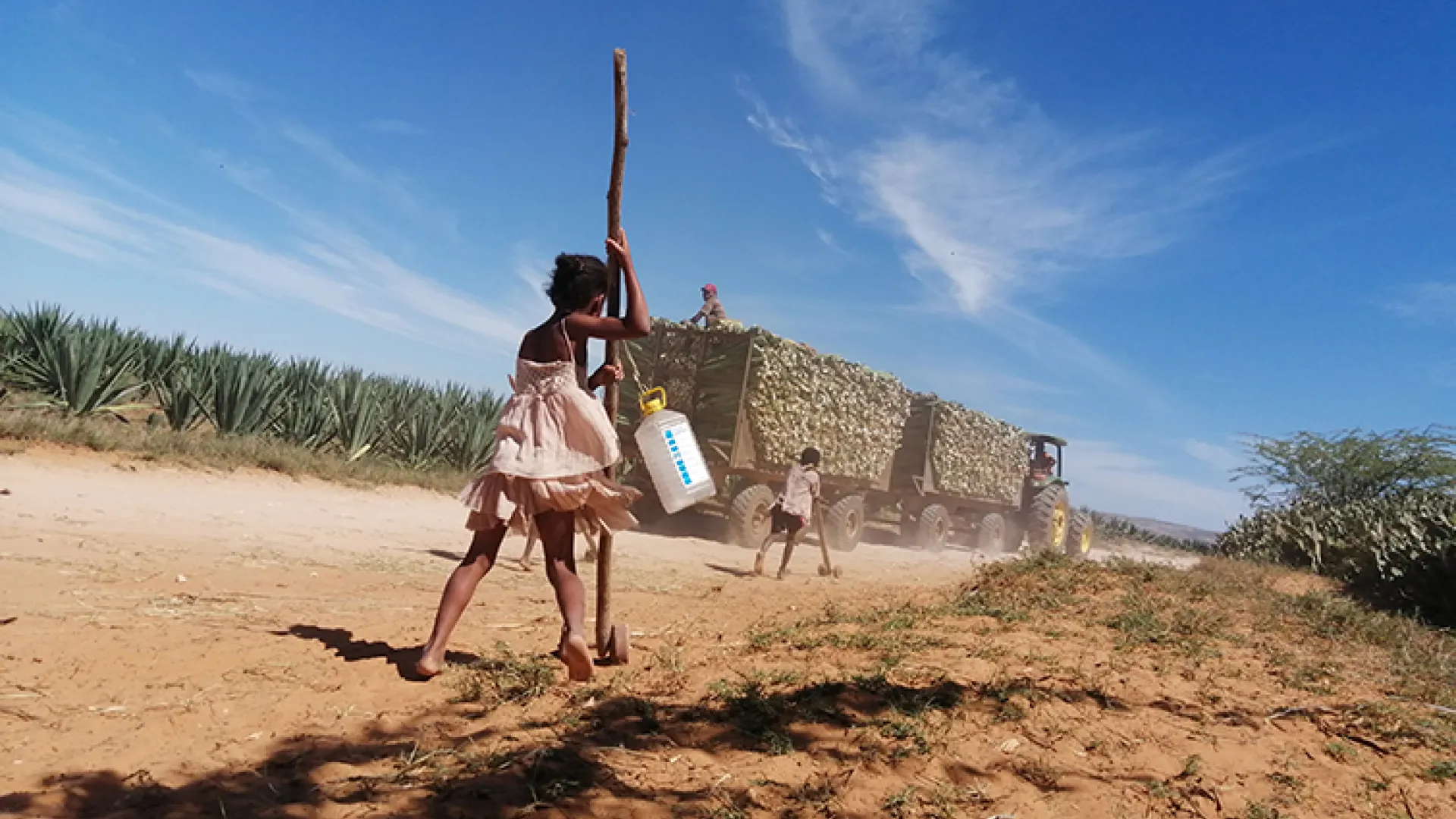
Photo courtesy of CAETIC Développement
Madagascar faces significant development challenges, with 80 percent of the population living on less than $2.15 per day. Undernutrition is prevalent, and primary school enrolment rates are low. In southern Madagascar, the cycle of poverty is further aggravated by natural and environmental disasters which undermine food security and the local economy.
These challenges have led policymakers in Madagascar to turn increasingly to social protection programs, such as cash transfers, to reduce poverty. Cash transfers have shown positive results and are cost effective.
To that end, the government of Madagascar, with support from UNICEF and Le Fonds d’Innovation pour le Développement, has developed the Zara Mira program. Zara Mira provides monthly cash transfers to children under the age of 15 and pregnant women to improve human development and poverty indicators in three districts in southern Madagascar. The program also offers referrals to social services, case management for child protection cases, and support for social and behavioral change in nutrition and parenting.
AIR's Impact Evaluation
UNICEF Madagascar commissioned AIR and its research partners, Holimalala Randriamanampisoa from the University of Antananarivo, and CAETIC Développement, a local research firm, to design and conduct an impact evaluation to understand the short- and long-term effects of the Zara Mira program and the potential to strengthen the national Malagasy social protection system.
Along with our research partners, we designed a robust baseline evaluation, combining quantitative and qualitative methods (a mixed-methods approach).
The study will provide UNICEF and the government of Madagascar with crucial evidence on key successes and lessons learned to inform the possible scale-up of Zara Mira to the national level, functioning as a key component of Madagascar’s social safety net.